



Why it is a 20-hour day
The maths is simple and nobody can change it. Giza is about 470 km from Hurghada. The road runs north along the Red Sea coast past Ras Gharib and Zafarana, then turns inland. Operators budget just under five hours (a coach with few stops) to six hours (a van) each way. Then comes Cairo itself: Giza is on the western side of a city of more than 20 million people, and the afternoon traffic doesn't care about your tour.
At the end of the day there is often a wait. One large bus operator says all its buses wait for the evening convoy from Cairo back to Hurghada, and fills the time with a papyrus or essential-oil shop. That is why the honest listings say 18–21 hours, not 14.
A few things make the night drive easier: a neck pillow, a warm layer (the air conditioning is usually set very cold), and a breakfast box from your hotel, ordered the evening before. Wait at your hotel's main gate on the road, not in the lobby, if the operator asks you to.
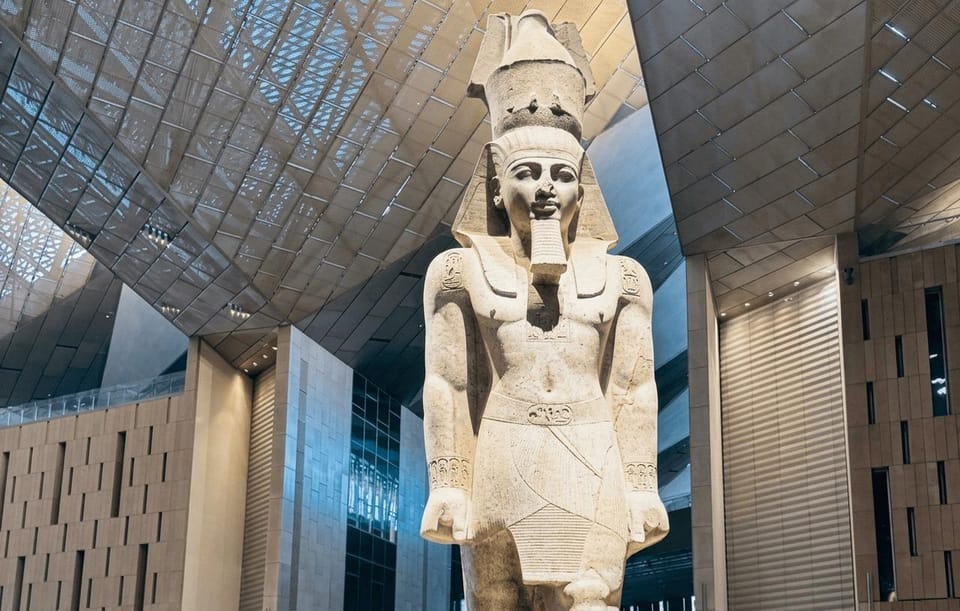
Grand Egyptian Museum or the old museum
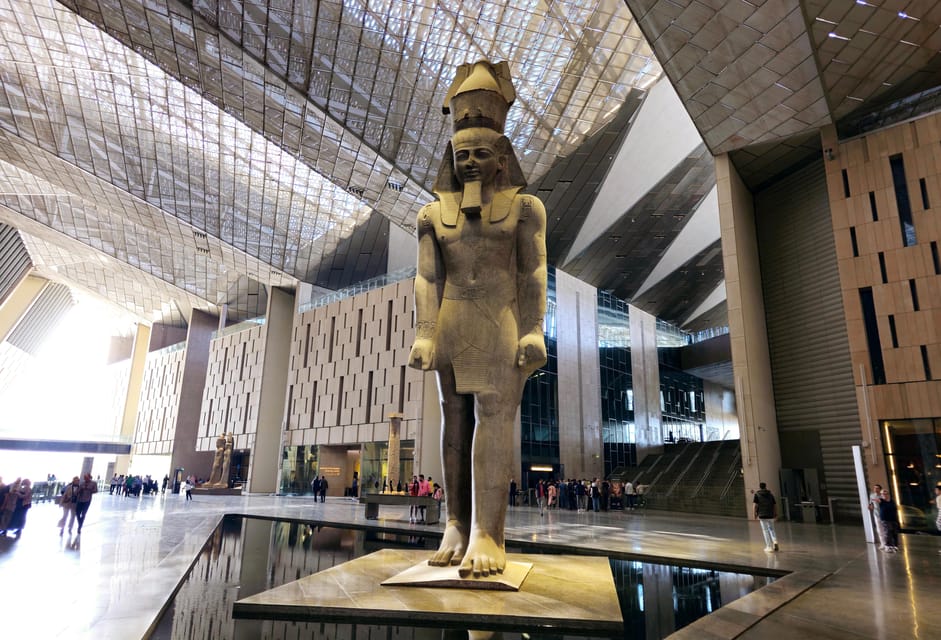
Every Cairo tour includes one museum, and the choice matters more than it used to.
| Grand Egyptian Museum (GEM) | Egyptian Museum, Tahrir Square | National Museum of Egyptian Civilization | |
|---|---|---|---|
| Where | Next to the Giza plateau | Central Cairo | Old Cairo (Fustat) |
| Tutankhamun | The whole collection, including the gold mask | No longer shown here | No |
| Highlight | The Tutankhamun galleries, the grand staircase | The old building and the huge Old and Middle Kingdom collection | The Royal Mummies Hall |
| Effect on your day | Short drive from the pyramids, so more time on site | A drive across the city centre | A drive across the city |
For most people the GEM is the better pick on a day trip: it is next to the pyramids, so you lose less time in traffic, and it has Tutankhamun. Choose Tahrir if you have already seen the GEM or prefer the older building. Choose the Civilization Museum if the royal mummies are the point. Some tours offer it, but often only with a minimum group size. Check which museum your booking actually includes, because a few listings let you pick at checkout.
Bus, van or private car
| Big bus | Small-group van | Private car | |
|---|---|---|---|
| Road time | Just under 5 h each way, a few stops | About 6 h each way | About 6 h, stops when you want |
| Group | A full coach | Small group | Your party |
| Comfort | Reclining seats; can't lie down | Less legroom, fewer stops | Most space, quietest |
| Extra stops | Shops while waiting for the convoy | Fewer | Only if you ask |
| Price level | Cheapest | A bit more | Roughly four to five times a bus seat each, for two people |
Pickups from Makadi, Sahl Hasheesh, El Gouna, Soma Bay and Safaga cost extra on most tours and mean an even earlier start.
What you may pay on the day
Look at the 'not included' list, not the photos. Commonly extra:
- Inside the Great Pyramid (or Khafre's pyramid). A separate ticket on top of the plateau ticket; see the fee card.
- Entrance fees on tours that list them as an option. The cheapest prices are often "transport, guide and lunch" only.
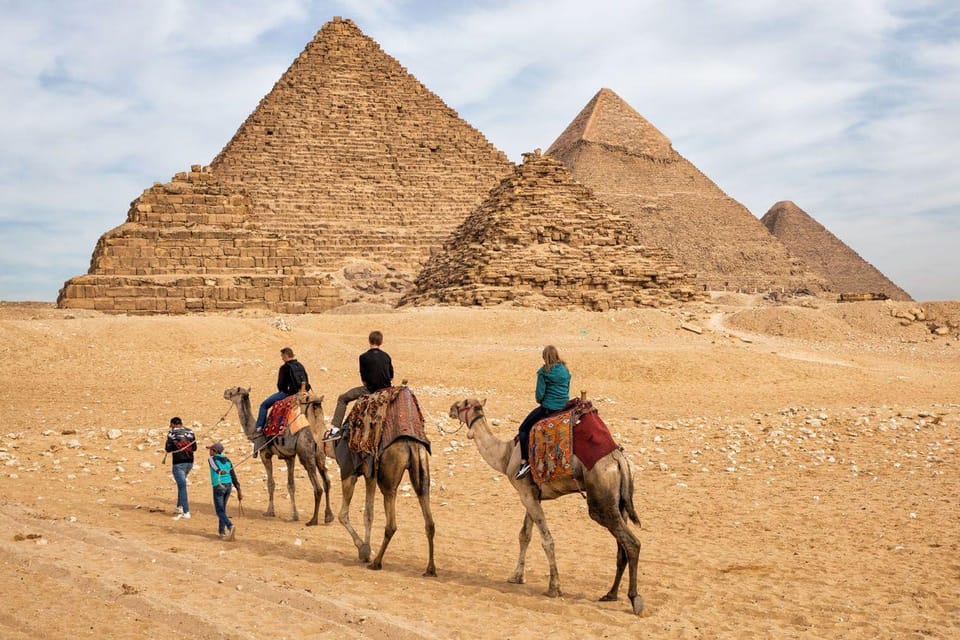
- Camel or horse rides at the plateau. Agree the price and the route before you get on.
- A Nile boat or felucca ride. Optional, paid separately.
- Drinks at lunch, and tips for the guide and driver.
Who should not do it by road
Families with children under about eight, anyone with back or knee trouble, and anyone flying home the next morning. For them, the plane version or a night in Cairo is worth the money. If you have three or more free days, Cairo is better done as a separate two-day trip than squeezed between beach days.