







Bus, minivan or private car
Every Luxor tour from Hurghada visits roughly the same places. You pay more or less depending on how you get there and how many people you share the guide with.
| Big bus | Small-group minivan | Private car | |
|---|---|---|---|
| Group | A full coach on busy days | Often capped at 8–9 people | Only your party |
| Comfort on the road | Big seats, toilet on board | Faster, but less legroom | Stop when you want |
| Guide | One guide for the whole bus | One guide, easier to ask questions | Your own Egyptologist |
| Language | Several on offer; check yours | Fewer languages, smaller groups | Your choice |
| Price level | The cheapest seat | A bit above the bus | Roughly two to three times a group seat each, for two people |
Read the small print on the cheap bus tours. One large operator says the vehicle depends on how many people booked that day, so on a quiet day your "big bus" may be a minibus. That's not a problem, just don't book it for the onboard toilet alone. Language is another catch. On some tours the driver speaks little English and the guide only joins you in Luxor, so the first four hours are quiet.
West Bank first, then Karnak
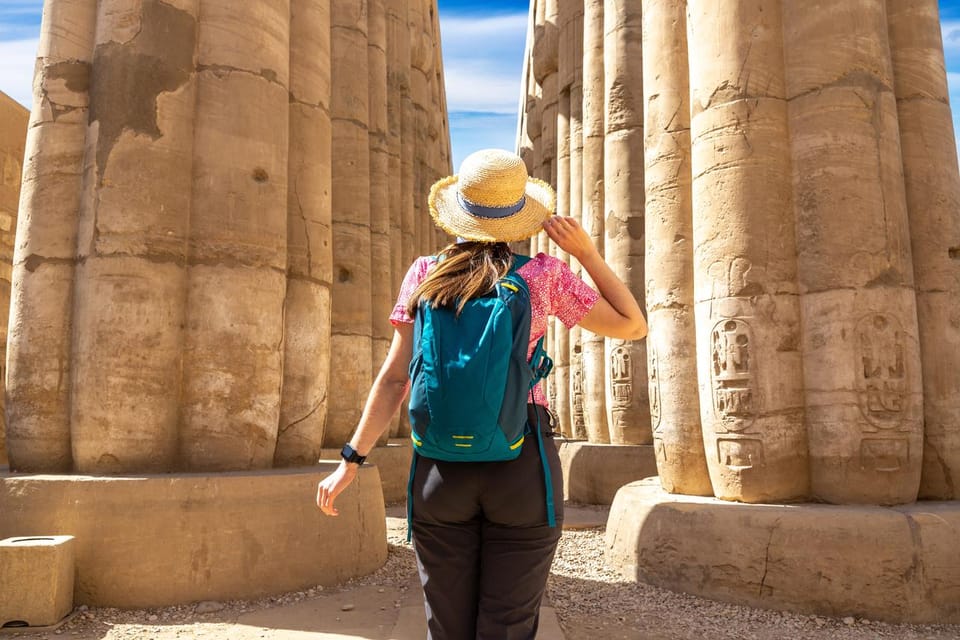
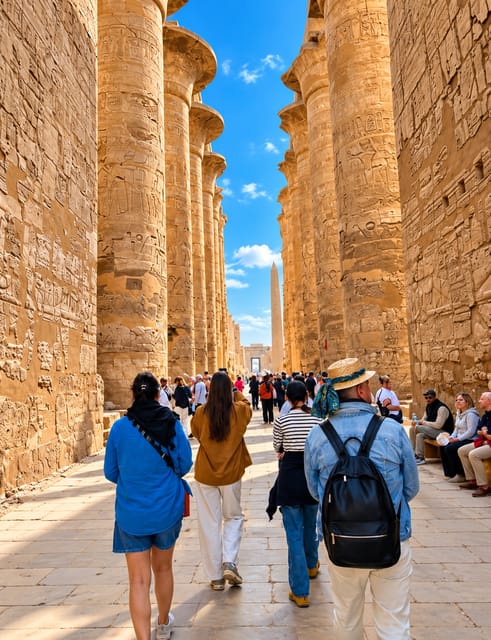
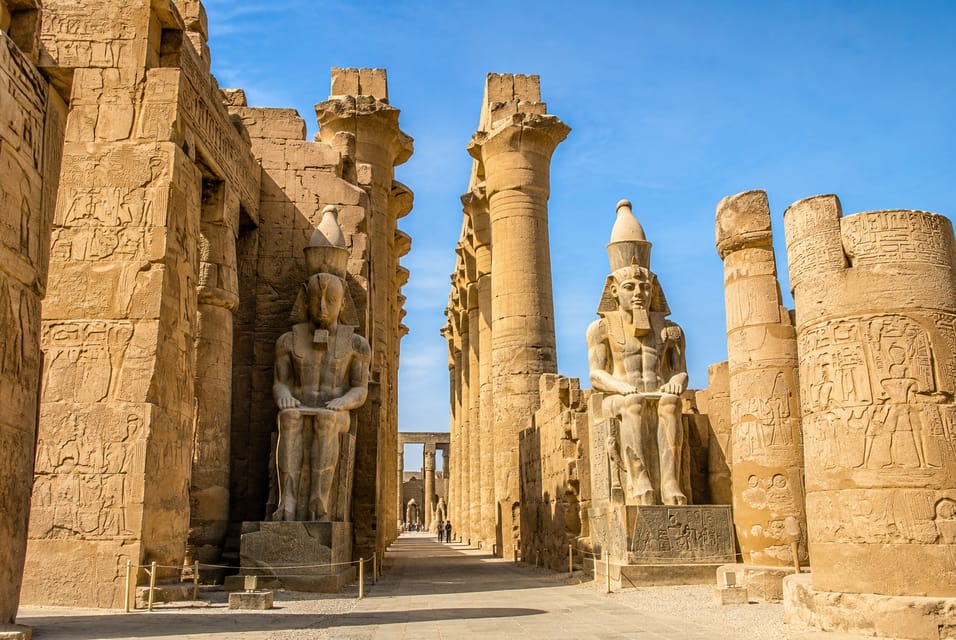
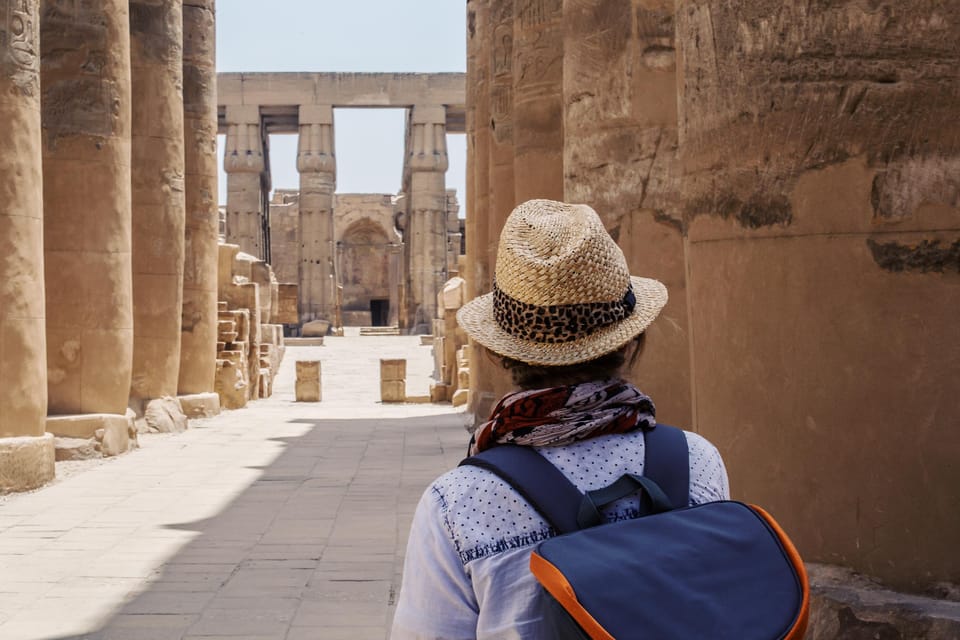
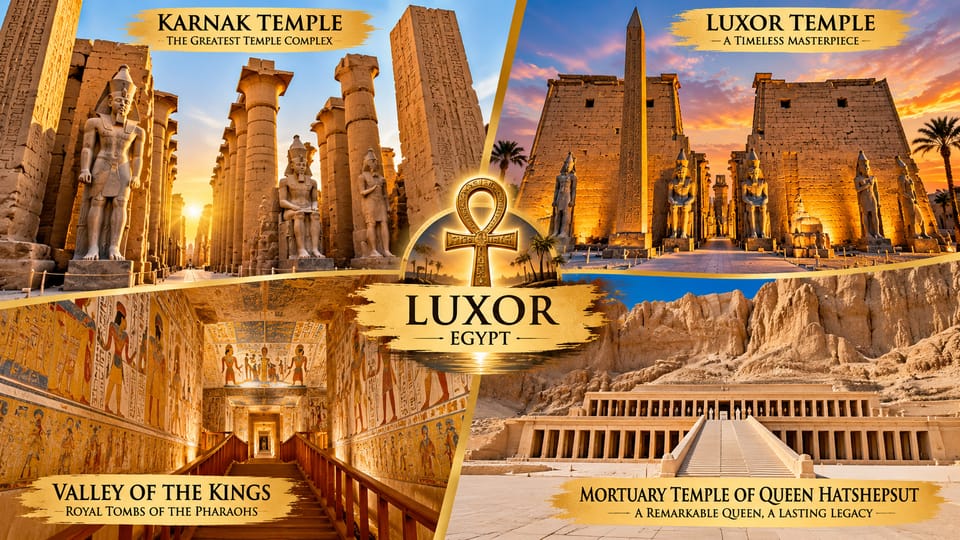
Luxor sits on both sides of the Nile. The tombs and memorial temples are on the West Bank, on the edge of the desert. Karnak and Luxor Temple are in the town on the East Bank. Most day trips cross to the West Bank first, while the rock of the Valley of the Kings is still cool. They come back over the river for lunch and spend the afternoon in Karnak's hypostyle hall, where the columns give shade. Luxor Temple is usually a drive-past or a photo stop on a day trip. If seeing it at night is on your list, stay over.
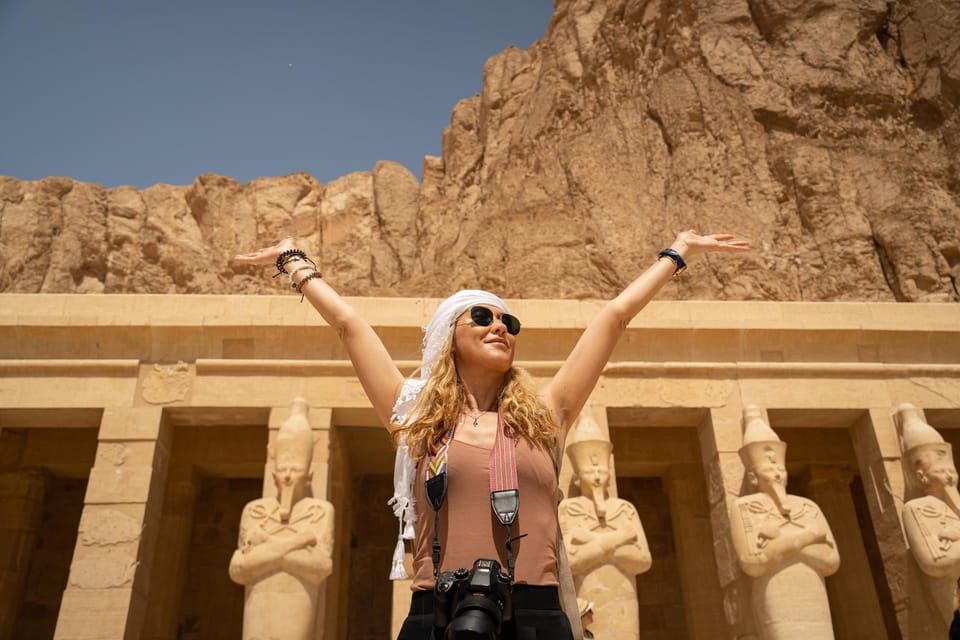
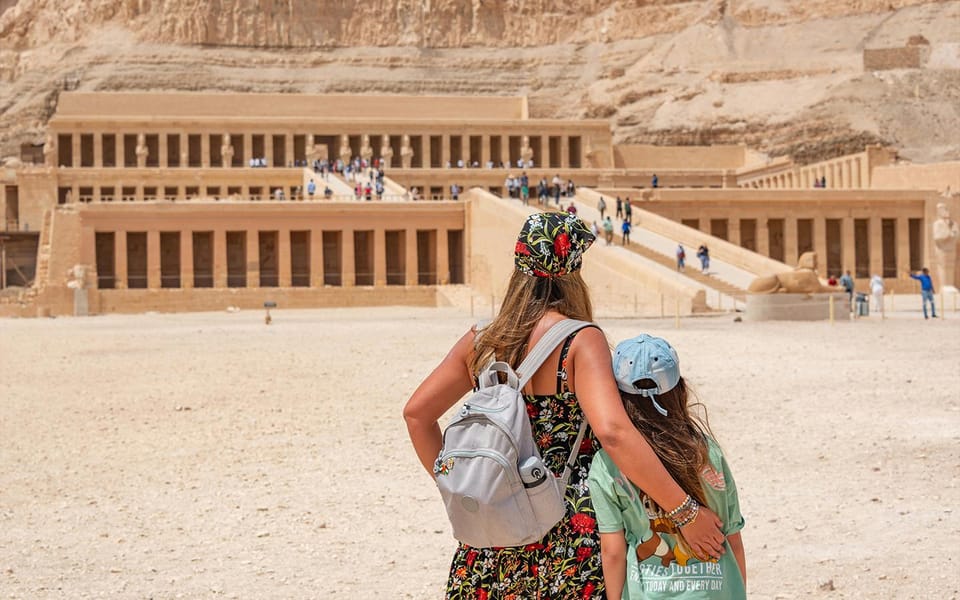
You get about two hours in the Valley of the Kings and up to two hours in Karnak. Hatshepsut takes 45–50 minutes. The Colossi of Memnon are a short roadside photo stop.
What the ticket covers and what you pay on the day
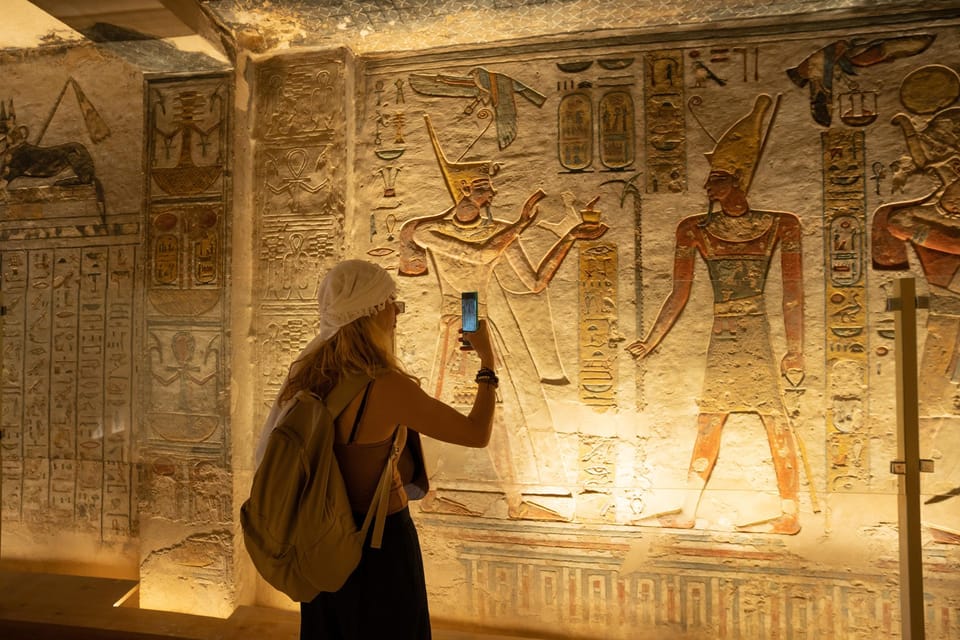
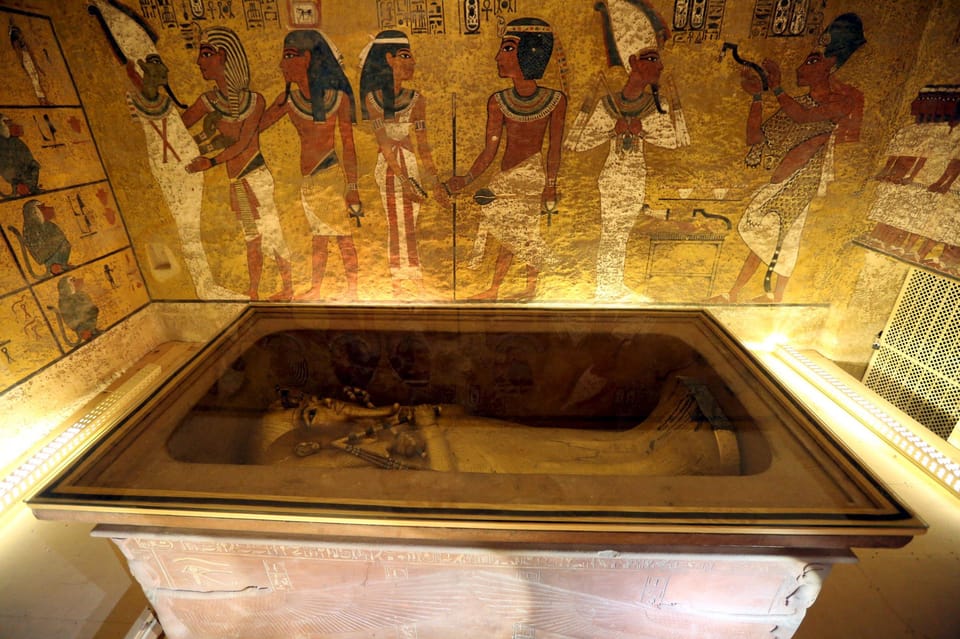
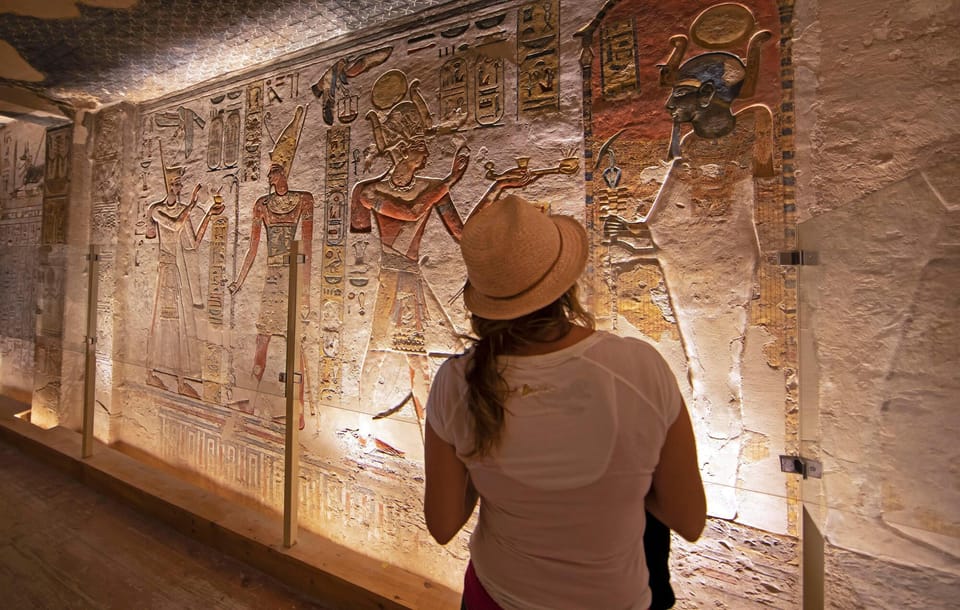
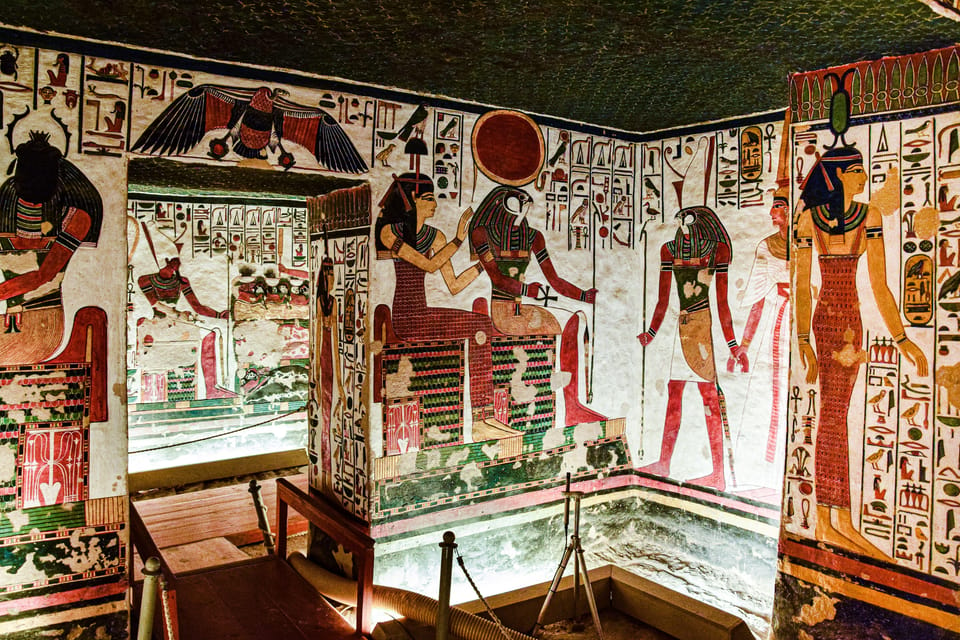
The general Valley of the Kings ticket covers three tombs. Which three are open changes from season to season, and your guide picks from the open ones. Tutankhamun's tomb is a separate ticket. So are Seti I and Ramses V & VI. Many tours list Tutankhamun as an option you tick when booking. Some guides let you pay for it on the spot if you forgot, but don't count on that. Tutankhamun's tomb is small, and most of his treasures are now in the Grand Egyptian Museum in Cairo. What you see in Luxor is the painted burial chamber and the mummy. Current amounts for all of these tickets are on the fee card.
Not included on most group tours: drinks at lunch, the boat across the Nile (on some tours), and tips for the guide and driver. Almost every group tour also has a 30–35 minute stop at an alabaster workshop or souvenir shop. You can sit it out.
The balloon add-on
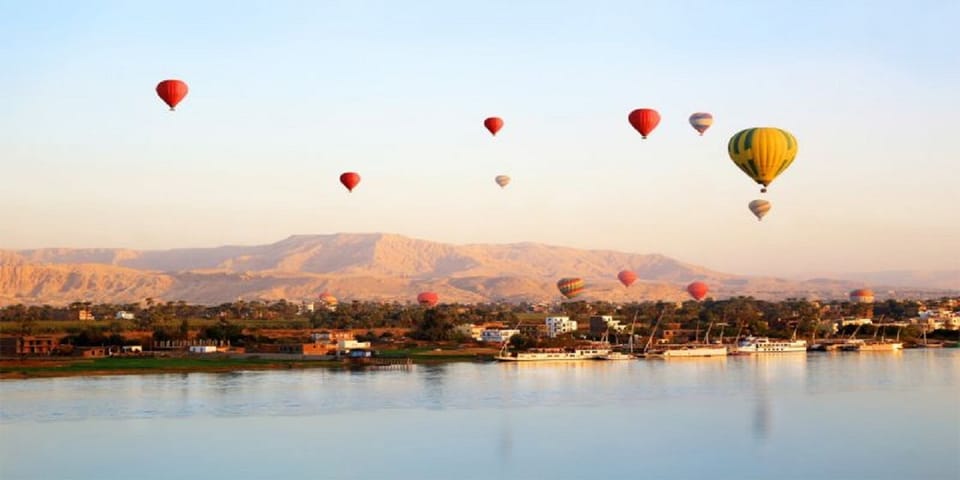
Luxor balloons take off from the West Bank at sunrise. From Hurghada, that is only possible if you leave the night before. Balloon day tours pick up around 23:00, drive through the night, give you tea at a café before the launch, and then run the normal sightseeing programme. That is a full 24 hours, mostly awake. Balloon flights are cancelled in strong wind, and the usual minimum age is 6. For most people the balloon makes more sense with a night in Luxor.
Pickup zones and the road
Tours price from central Hurghada. Makadi, Sahl Hasheesh, El Gouna, Soma Bay and Safaga usually cost extra and mean an earlier knock on the door. The operator normally messages you the afternoon before with the exact time. Ask your hotel for a breakfast box the evening before, because the restaurant won't be open at 04:30. Expect at least one checkpoint stop on the road. Travellers sometimes report waits of half an hour or more.
Who should skip it
Skip it if you are travelling with toddlers, if anyone in the group can't handle uneven ground (the tombs have steep ramps and steps), or if you only have three or four beach days and want them. In midsummer, choose a tour that starts at the Valley of the Kings rather than ending there.