Before you buy: the welfare question
Here are the facts, and then you decide.
What HEPCA says. The Hurghada Environmental Protection and Conservation Association has run a campaign against dolphinariums in the Red Sea since late 2010. It started when four bottlenose dolphins, believed to come from the drive hunts in Taiji, Japan, were found in a villa pool in Hurghada. HEPCA's campaign has two aims: get the government to ban dolphinariums in the Red Sea, and persuade the public and tour operators not to visit or sell them. It sends tour operators letters asking them to commit to that.
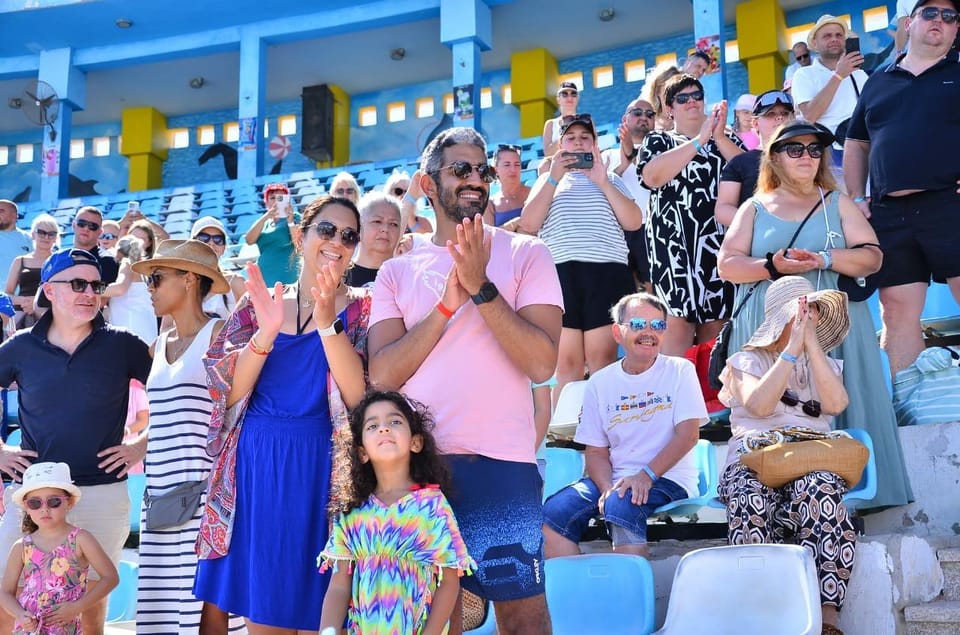
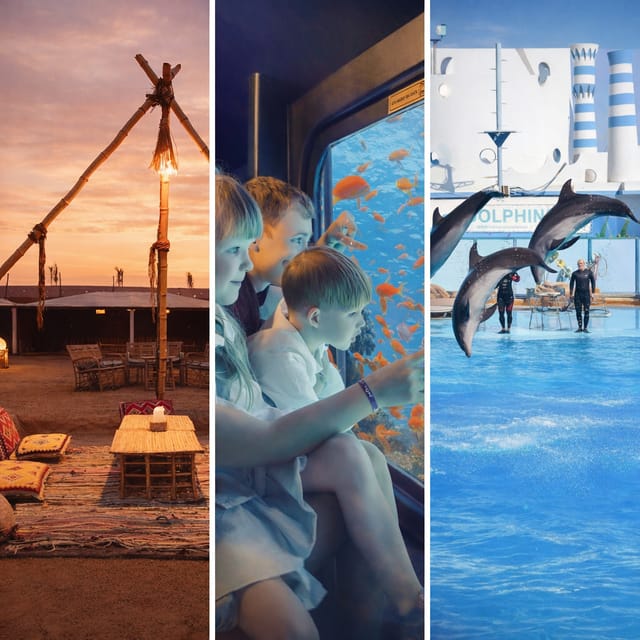
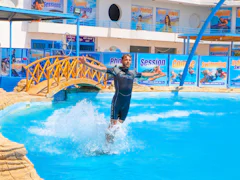
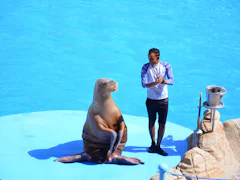
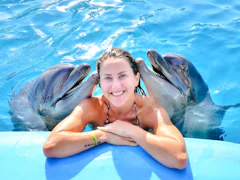
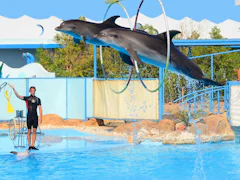
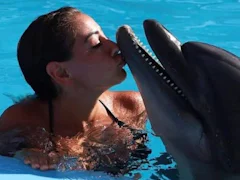
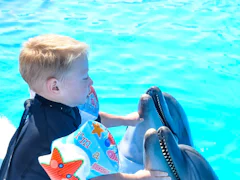
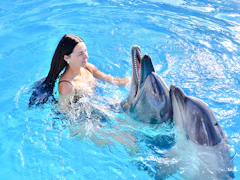
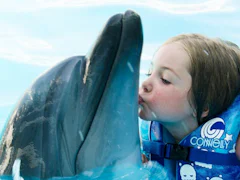
What you see on site. Agencies that sell the trip are open about some of it. One local seller notes that the pool area at Dolphin World is small and that only two small dolphins perform there. The show has dolphins doing jumps and tricks with trainers, "painting" pictures that are then sold to the audience, and a sea lion act. After the show you can pay for photos with a dolphin and a few minutes swimming in the pool.
Why welfare groups object. In the wild, dolphins live in social groups and travel long distances every day. A concrete pool can't give them that, and close contact with many swimmers is stressful for the animals and carries a risk of passing on infections both ways. This is why HEPCA's code for wild dolphins forbids touching them, even when a dolphin comes close.
We list Dolphin World because people search for it and should be able to decide with the facts. We don't recommend it over seeing dolphins in the wild.
What a visit involves
If you go, the morning trip runs like the schedule above: pickup around 09:00, a show of about an hour, then the add-on sessions. The ticket price usually covers the show and, on some listings, the transfer. Photos, the photo session in the pool and the swim session are paid extras, and the swim needs a swimsuit; some listings lend one. Ask exactly what's included before paying, because "swim with dolphins" can mean a 5-minute session.
Two different venues get mixed up in listings: Dolphin World in Makadi Bay, and Dolphina in Hurghada near Senzo Mall, which has a separate afternoon show. Check which one your ticket is for.
Seeing dolphins in the wild instead
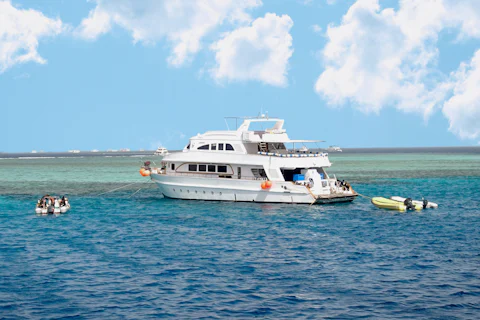
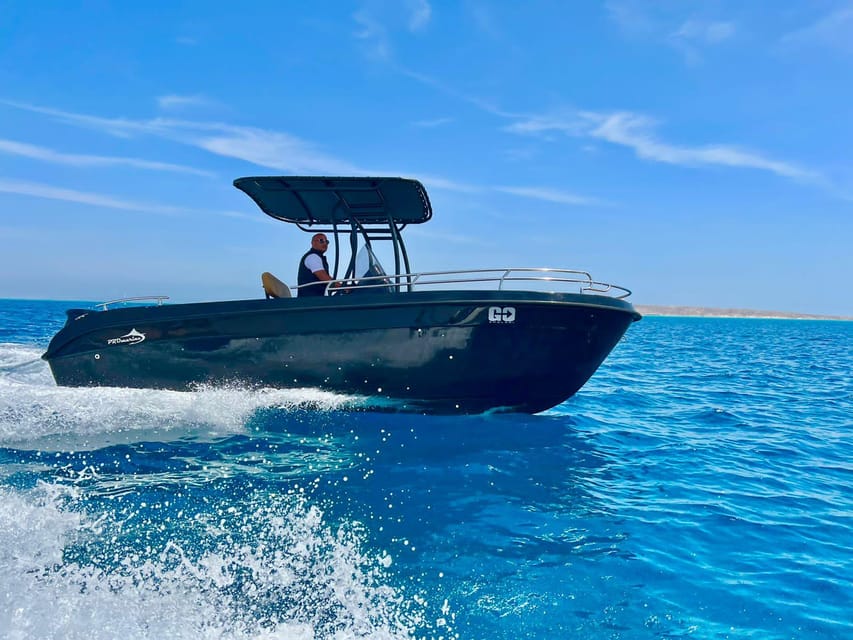
The Red Sea off Hurghada has wild dolphins. The best-known place is Sha'ab El Erg, a reef north of town that every agency sells as Dolphin House. A pod often rests there during the day. A big-boat day includes two snorkel stops and lunch; a speedboat gets you there and back in about four hours.
It's not a guaranteed show. Some days the dolphins are elsewhere, and on good days you swim near them for a few minutes, on their terms. The HEPCA code applies: life jacket, mask and fins; enter the water quietly; swim beside the group, never at it; no touching and no feeding. Boats must keep their distance and never chase.
For a child who wants to see a dolphin, a few minutes watching a wild pod surface next to the boat is usually the moment they remember. Our Dolphin House page compares the boats.
If you go anyway
Book a ticket that names the venue, the show time and whether the transfer is included. Expect to be offered photos and swims on site, and decide in advance what you'll pay for. Take cash in small notes for extras.
If you're still deciding, look at it from the child's side: most children want to see a dolphin, not a trick. A morning on a boat near a wild pod gives them that, and the snorkel stops give the day a plan B.