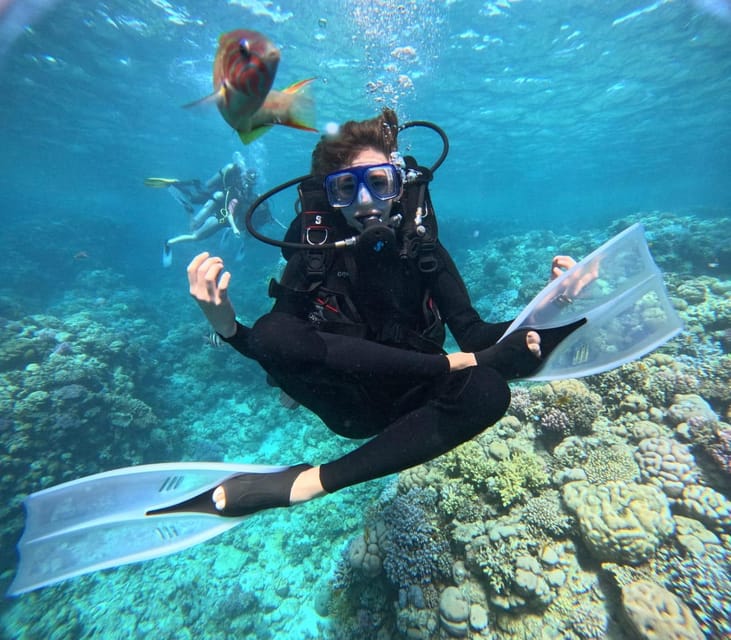
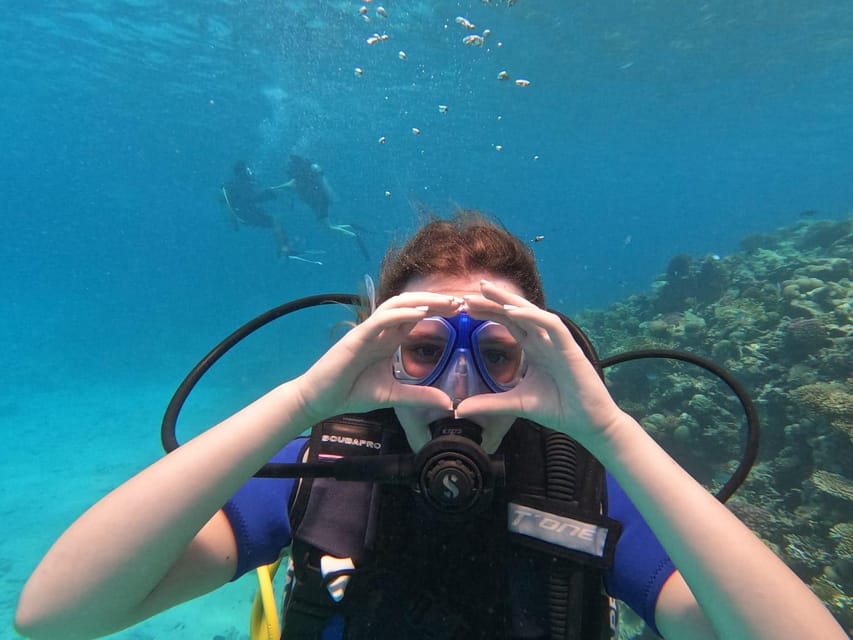
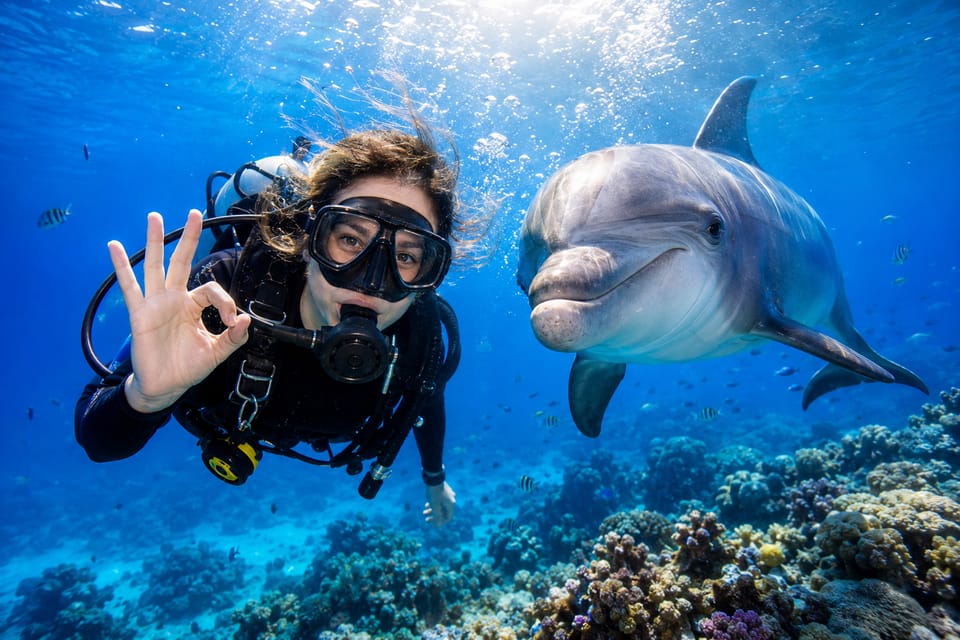
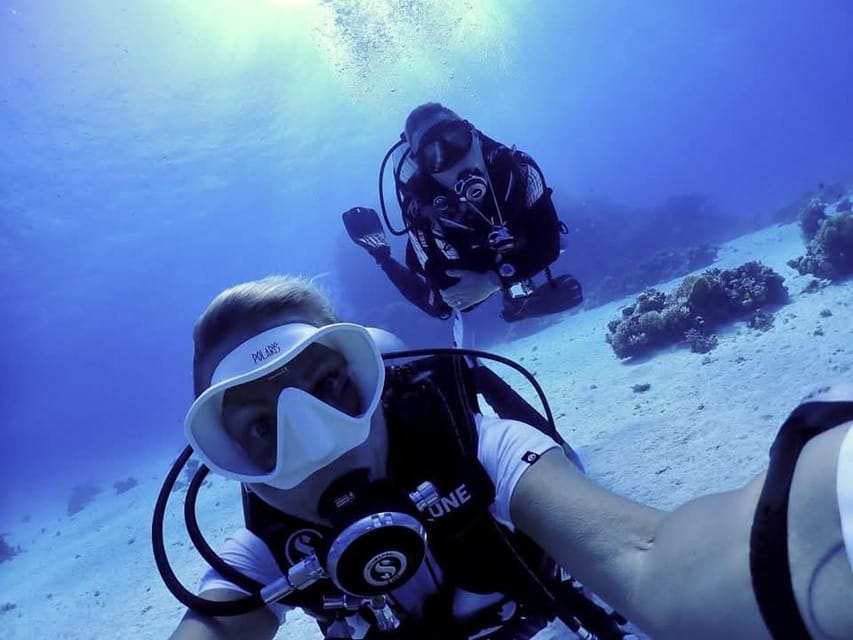
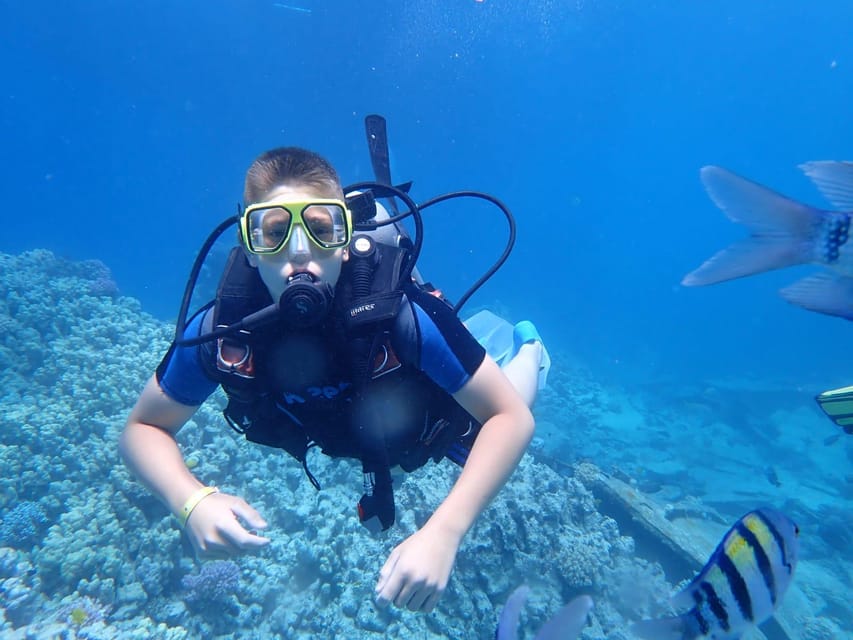
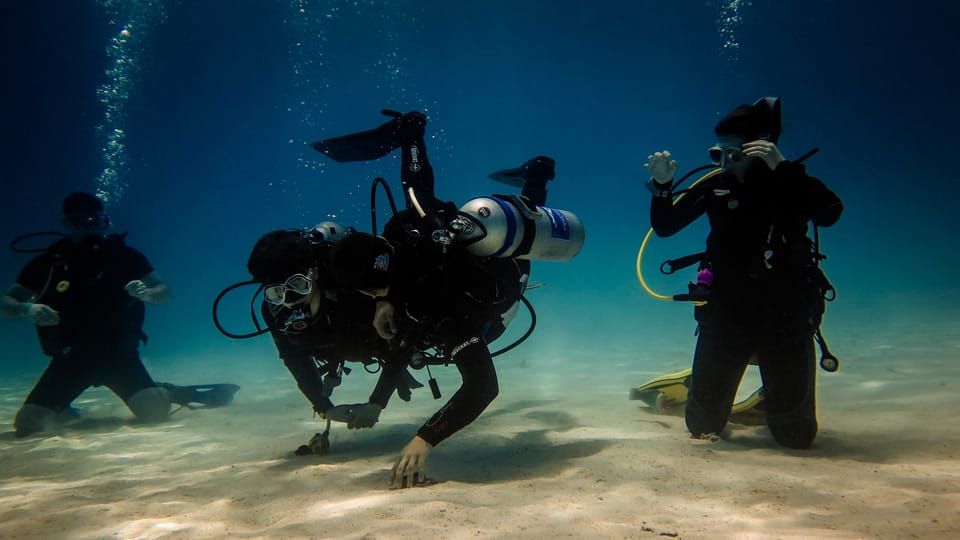
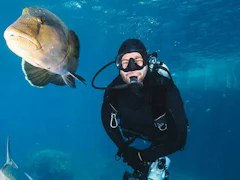
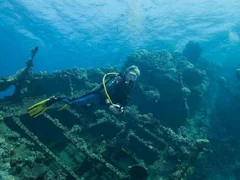
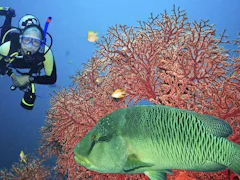
Four ways to dive from Hurghada
| Intro dive | Open Water course | Day boat (certified) | Liveaboard | |
|---|---|---|---|---|
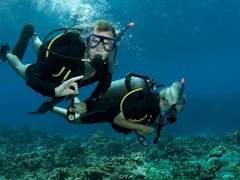
| Who it's for | Never dived | Want a permanent licence | Have a PADI/SSI/CMAS card | Experienced divers |
| Time | 1 day, 1–2 dives | 3–4 days | 1 day, 2 dives | Usually 1 week |
| Depth | Shallow, with instructor | Up to 18 m by the end | Within your card's limit | Within your card's limit |
| Where | Sheltered reefs near Giftun | Pool or calm reef, then reef dives | Giftun, Abu Ramada, Fanous, El Erg and more | North wrecks or southern offshore reefs |
| Sleep | Hotel | Hotel | Hotel | On the boat |
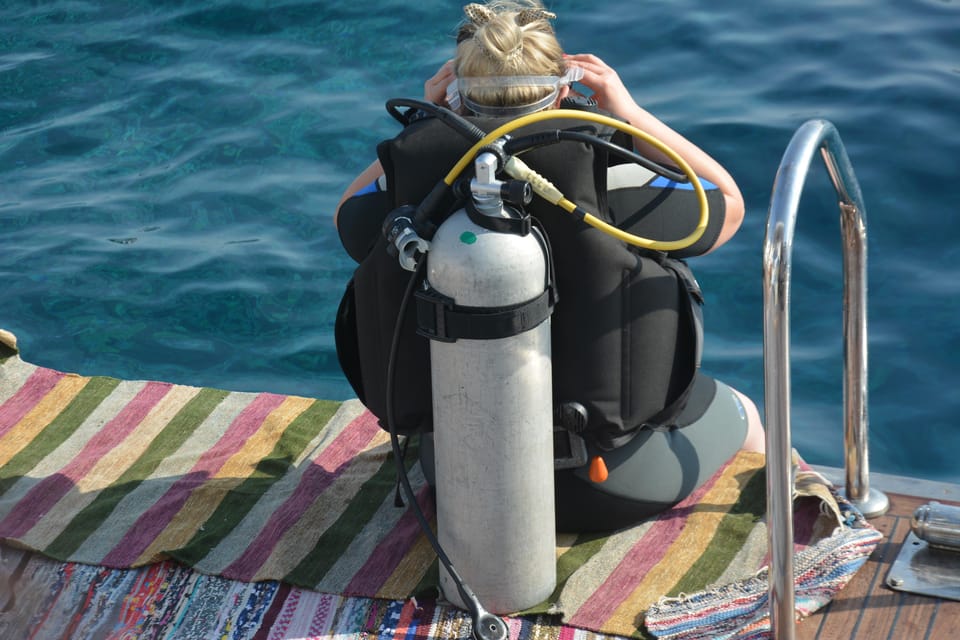
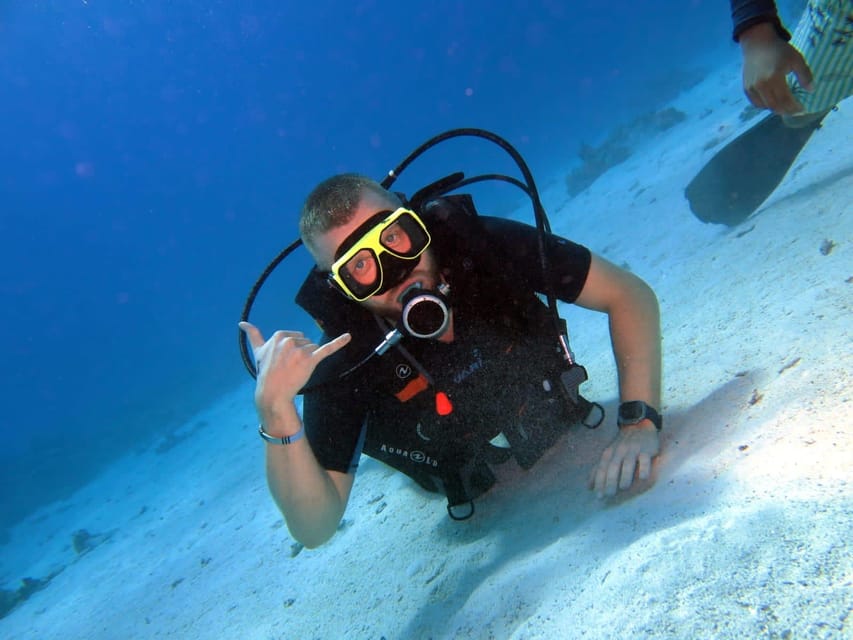
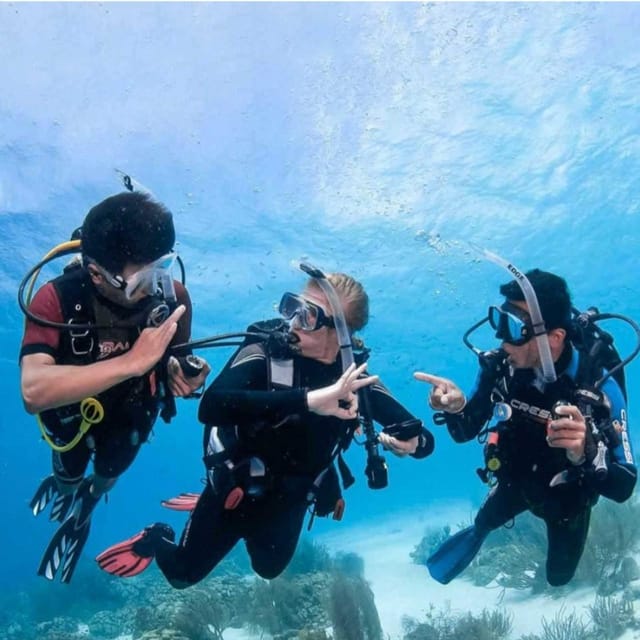
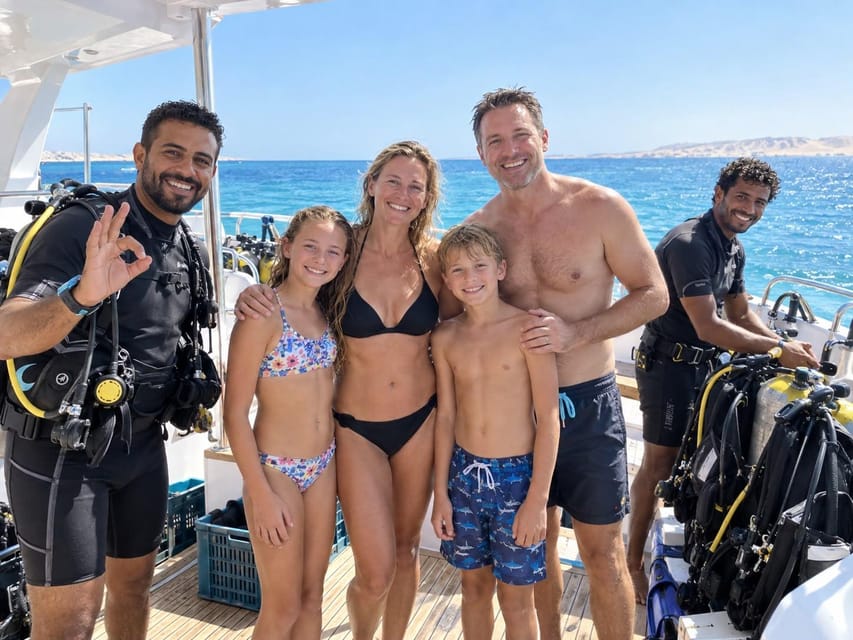
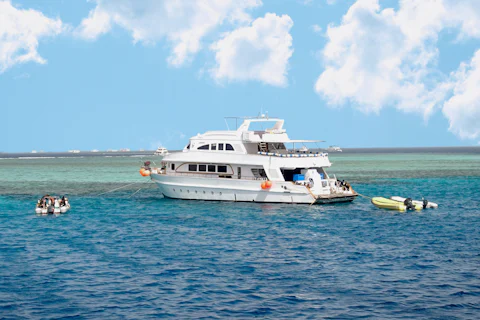
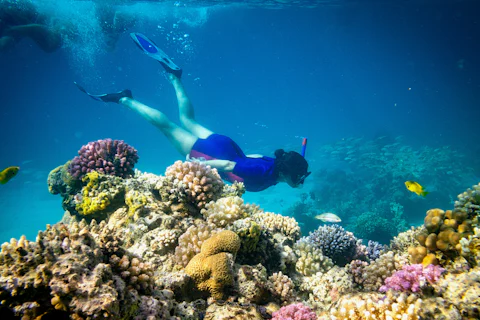
Many day boats mix all three groups. Certified divers go with a dive guide, intro divers with an instructor, and snorkellers stay near the surface. That makes diving easy to fit into a family holiday: one person dives, the rest snorkel, everyone eats lunch on the same boat.
The reefs a day boat reaches
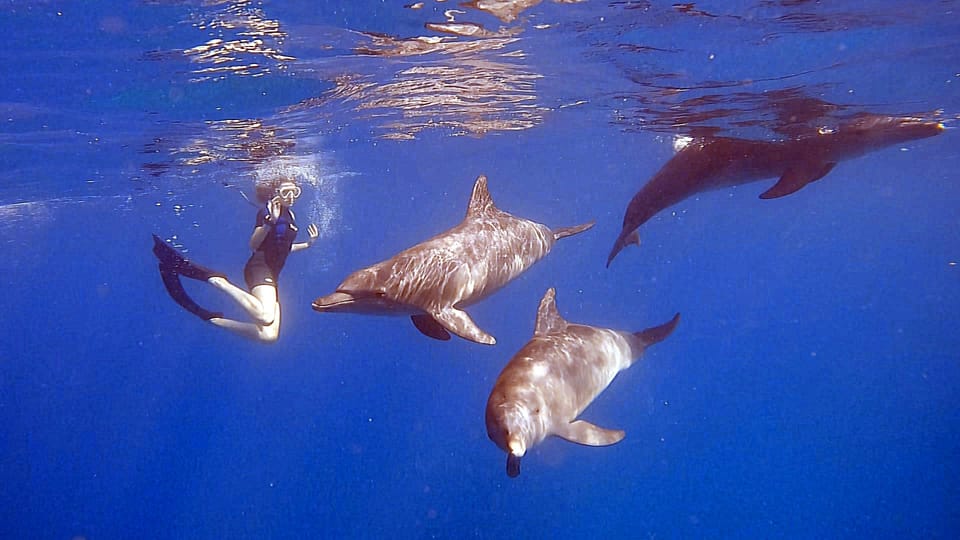
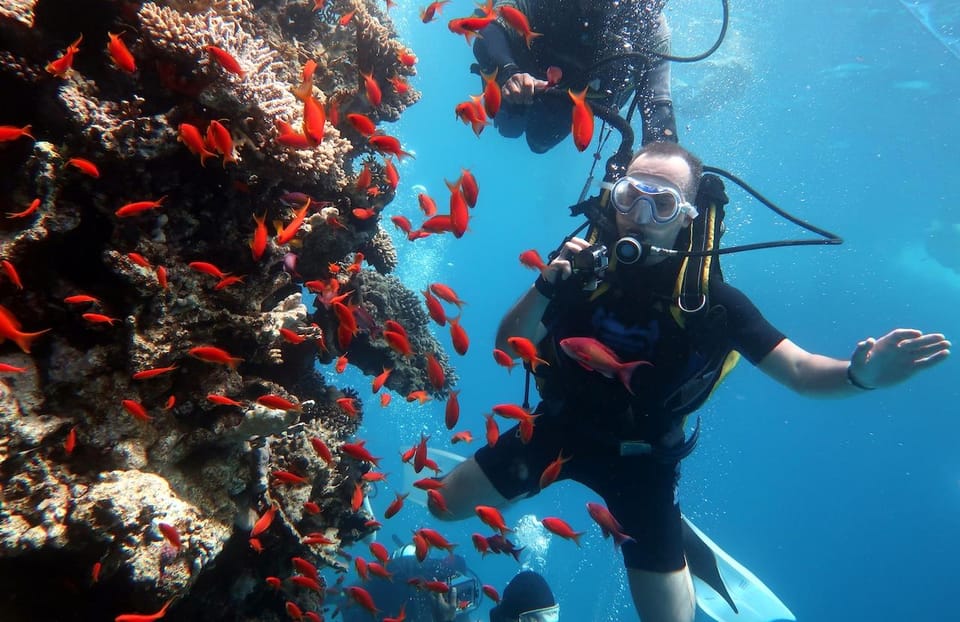
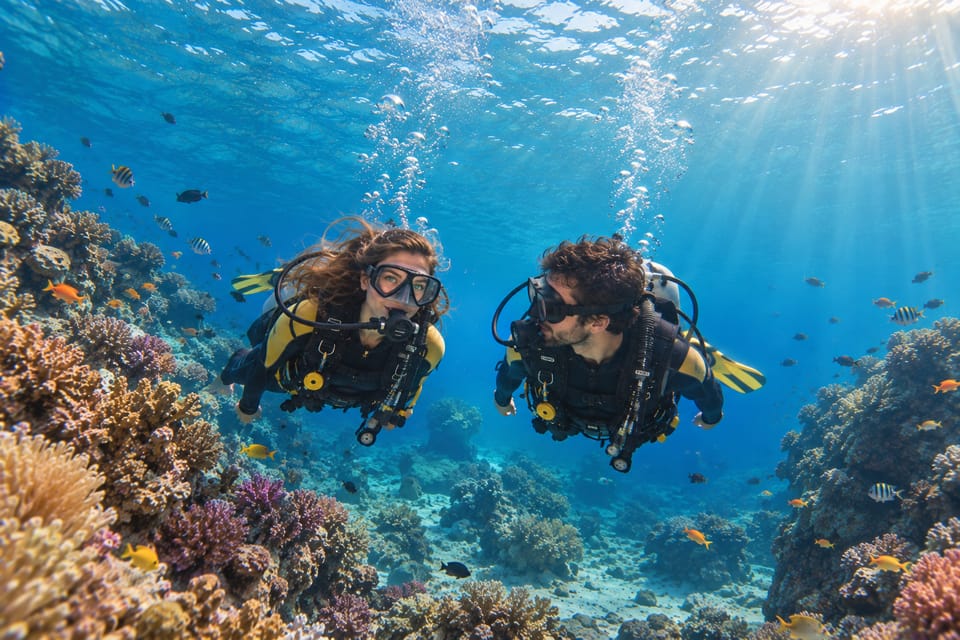
The usual daily sites sit around the Giftun islands and the reefs north and south of them. Small Giftun is a wall that drops deep, done as a drift dive when the current runs, so it suits divers with some experience. Abu Ramada, south of Giftun, has several dives with pinnacles and coral gardens and works for all levels. Fanous, close to town, is shallow, with a lagoon where dolphins sometimes pass. Sha'ab El Erg, the reef known as Dolphin House, is a big shallow horseshoe that is also used for night dives. Erg Sabina and Umm Gamar appear on many dive plans too.
Further away are the famous wrecks: the Abu Nuhas reef with its four wrecks to the north, and the Thistlegorm, a Second World War cargo ship in the Gulf of Suez. These are usually done from a liveaboard or on long day trips that leave before dawn. Liveaboards from Hurghada also go south to the offshore reefs of the Brothers, Daedalus and Elphinstone, which need experience and a good number of logged dives.
How to check a dive centre
Egypt's diving industry is regulated by the Chamber of Diving and Water Sports (CDWS). Licensed centres are members, and the CDWS publishes a blacklist of companies that are not operating legally or were closed by the Ministry of Tourism. Before you pay:
- Ask for the centre's CDWS membership and the instructor's PADI or SSI number. A real instructor can tell you in a second.
- Ask how many students per instructor on an intro dive. One-to-one or one-to-two is what you want for a first dive.
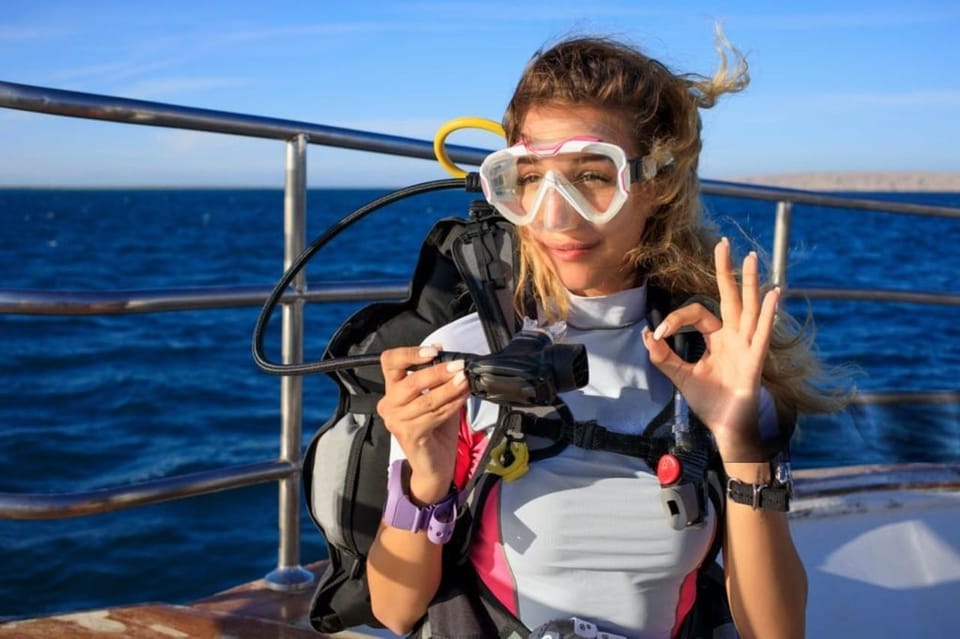
- Check the gear at the centre: regulators, a wetsuit that fits, a working gauge on your tank.
- Check that your travel insurance covers scuba diving, or buy dive insurance.
- Certified divers: bring your card and logbook. If you haven't dived for a year or more, book a refresher or a check dive first.
The national park and dive-site fees are not always in the price; see the fee card for the official amounts and the CDWS rules.
Weather, water and your ears
The water is warm in summer and cooler from about December to March, when a 5 mm wetsuit or more makes sense. The north wind can make the crossing to the outer reefs rough; on those days boats pick sheltered sites, so the dive plan on the board may change. Don't dive with a cold or blocked sinuses, and don't let anyone rush your descent on an intro dive. If your ears hurt, signal, go up a little and try again.
Booking online or at a dive centre
Booking a day boat or intro dive through a platform gives you card payment and written cancellation terms, and the dive centre behind it is named on the listing, so you can check its CDWS membership before the day. Walking into a centre gives you the chance to see the gear and meet the staff first, which matters more for a course than for a single day. Many hotels have a dive centre on the beach; that's convenient, but compare it with the boats from the marina before committing to a whole course.